

Bodyheart: Get off the Body Love-Hate Rollercoaster

“As a child, I never heard one woman say to me, ‘I love my body.’ Not my mother, my elder sister, my best friend. Not one woman has ever said, ‘I am so proud of my body.’”
‘Kate Winslet
If you are a woman, chances are this quote resonates in one way or another for you. In a culture that promotes an essentially unattainable body (all those models are Photoshopped, ya know), most women never feel content with theirs and certainly not enough to say so out loud.
Amber Krzys knows the feeling of body dissatisfaction well. The previous actress and performer tortured herself for years with her dislike for her body. “I blamed my body for the bookings I didn’t land or the guys who didn’t call. I comforted myself with food and punished myself with exercise. I was a mess’all because of a ‘when/then,’” she says. She believed that when she got the body she wanted, then she’d get the job and the guy.
After many years, Krzys made the decision to overcome her own cycle of body punishment and negative self-image. This choice changed the course of her life and work forever and ultimately seeded the creation of Bodyheart. Her organization’s mission is to help others develop positive relationships with their bodies.
At the core of Bodyheart and Amber’s mission is helping women establish a new relationship with their bodies. “You have to open up your heart to your body and start to get to know it, get inside it; that’s the only way to really love anything. It’s like a relationship with a person. You want to know them, have a connection. You know that when you meet someone, you don’t think they are attractive until you get to know them; it’s the same with your body. We judge from the outside, but I am all about getting to know the inside, because that will help you appreciate the outside.”
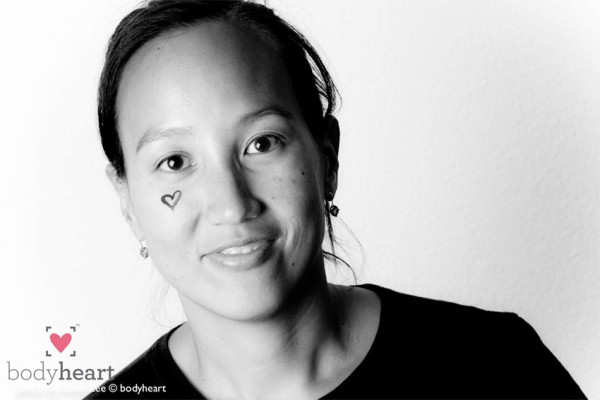
Krzys helps women develop this relationship through online and in-person programs. Bodyheart also has a campaign that involves women taking pictures of themselves with a focus on something each one loves about her body. “I wanted to make a statement about modeling and how every picture is retouched and fake. I wanted to celebrate what is real. By having her photo taken, each woman is asserting herself and having a conversation with herself about what she loves about her body’which is not common; most women, when they think about their body, the first thing they usually think about is what they don’t like.”
With all this emphasis on body acceptance and pride, where does improvement or change fit in? “If you want to change your body, I’m fine with that. There are people who are overweight and it’s a health issue, but how you get there is what’s different. When we value something in our lives, we take care of it. When you think of your body as something you want to take care of, to have for a long time, it becomes a relationship where you are communicating and responding out of respect’instead of saying, ‘I have to go out today and jog 80 miles because I ate that ice cream last night.’ That’s not from a place of love; that’s from a place of punishment.”
Part of learning to appreciate your body is learning what triggers you to dislike it’for example, those airbrushed, manufactured ‘perfect’ women in glossy newsstand magazines. “I don’t buy them,” Amber says. “The main reason is that money talks, and I don’t want to support that message of retouching. If I’m in line at the grocery store, I’ll look at them; I’m curious, I’m human. But it depends on my mindset. If I’m in a place where I am feeling insecure or susceptible, looking at that magazine is punishment, so I will probably feel worse. Every society has its ideal of beauty and I don’t think that’s bad; what I think is bad is that our society has gone to the complete extreme and nothing is real or attainable.”
The most pronounced reward you’ll get from establishing a functional relationship with your body is peace, according to Krzys. “There’s not as much drama, not as many ups and downs. It’s like in a relationship with a significant other. If you haven’t been communicating well and then you finally get it together and you’re on the same page, it’s easier. It’s like that with your body. Do the work and the acceptance and peace will come.”
6 tips for building a better body relationship from Amber Krzys
Think of your relationship with your body as you would with a person. There are four qualities that need to be present for a successful relationship with a person or with your body: love, trust, respect and communication. Examples follow.
Learn to communicate with and trust your body. Pay close attention for a while to your body’s cues. With food, see what makes you feel bloated and gassy or what makes you feel energized and good. Then avoid the foods that make you feel badly, but out of a place of respect for your body, not punishment.
Learn to love your body. When you love someone, you show affection to that person. Try showing affection to your body via touch. Before going to bed, place your hands on a part of your body that you’ve been mean to or don’t like, and apologize first. Then tell it that you love it. Whenever I mention this in public talks, some people cringe; they aren’t comfortable touching their bodies like that. But your body is the only thing that is 100 percent yours, so own it!
Dote on yourself a little. Take an extra 20 minutes getting ready each day’coordinating outfits, doing your hair and makeup; it can be a real loving gesture. You can tell when someone takes pride in their body and likes themselves.
Learn to respect your body. Hiding your body is like hiding someone you’re dating. You’re kind of ashamed and you’re not sure what your family and friends will think, so you hide him. We do that to our bodies when we hide our bodies.
Experience more joy. Experiencing more joy and making it a focus in your life takes the focus off a negative relationship with your body or food. It’s like when you start a new relationship with someone and you’re not focused on eating, you’re focused on the joy. Don’t stop doing those things that give you joy because you aren’t happy with your body. When you say, ‘I am not going to do something until I lose those last 10 pounds,’ you put yourself in a prison. Staying in isolation helps you to feel worse about yourself and to overeat.








Love this story? Signup to access our free eBooks and newsletters.