

ioby: Bring Your ’Hood to Life!

by Mitchell Clute
What do a dedicated bike lane in Memphis, a community garden in Pittsburg, and a neighborhood clean-up project in Brooklyn have in common? They’re all supported through ioby—a New York–based nonprofit corporation dedicated to funding citizen-led community projects through that most nonlocal of mediums, the Internet.
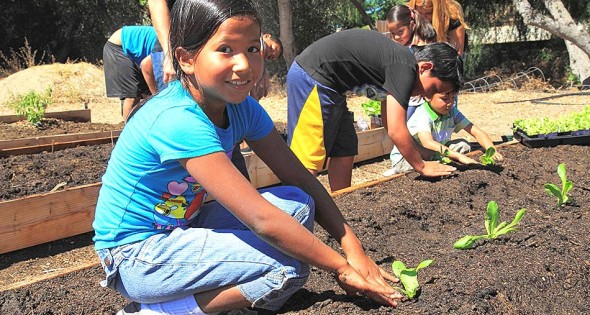
Even in the brave new world of crowd-funded campaigns and ultralocal action, ioby stands out by combining the global reach of online tools with a deep connection to urban neighborhoods and the people who live in them. Begun in Brooklyn, ioby has helped create green spaces, carve out urban farms and beautify inner-city neighborhoods. But more than that, ioby supports people in cities across America who devote their time and care to solving problems in their own backyards.
How It Began
ioby—which stands for “in our backyards,” a play on the old environmental slogan “Not in my backyard!”—is the brainchild of executive director Erin Barnes and COO Brandon Whitney, who met while earning their master’s degrees at the Yale School of Forestry & Environmental Studies.
“We both cared deeply about the environmental movement and its goals, but we wanted to refocus the movement’s activities to address urgent issues such as climate change in a way that included young people of color and helped steward urban spaces and neighborhoods,” Barnes tells Organic Connections.
In launching ioby, each co-founder brought his/her respective background and interests to the table. Barnes had previously worked for the Save Our Wild Salmon Coalition and as the environmental editor at Men’s Journal. Since her youth in Virginia, when she learned that her state received much of New York City’s unwanted solid waste, she had been fascinated with how humans impact the environment; then, while completing her MA, Barnes did fieldwork on the socioeconomic value of water in the Amazon basin.
Whitney, meanwhile, was an anthropologist by training and previously worked for the interdisciplinary think tank Center for Humans and Nature, focusing on water, climate change and poverty.
“I was thinking in terms of economics and value, and he was thinking in terms of culture and ownership,” Barnes says. “This combination led us to focus on hyperlocal urban activity in the environmental movement.”
ioby incorporated in 2008, beta-launched in 2009, and funded its first successful projects in 2010, just as the idea of crowdsourcing had begun to capture the public’s imagination. Over the past four years, its growth has been astronomical.
Now with offices in Brooklyn and Miami, ioby has successfully funded almost three hundred projects in sixty-one cities, with 83 percent of projects launched receiving their requested funding.
How It Works
“ioby is a way to strengthen community through timely, discrete, right-size funding,” Barnes offers. “Our big dream is creating a network at a local level that other neighborhoods could try too. We’re connecting neighbors to neighbors across huge geographic boundaries. It’s an online tool that powers offline action.”
People interested in funding a neighborhood project begin by visiting ioby.org/idea to fill out a project application and begin a campaign page. Next, one of ioby’s team of leader action strategists will give a call to discuss the project details, make sure it fits ioby’s mission-driven local, nonprofit model, and offer strategies for success.
After initial planning with an action strategist, green-lit projects can go live with a crowd-fund campaign starter page. Each project is assigned a success strategist to offer coaching through the entire process. This careful oversight is one of the reasons that so many of ioby’s projects meet their funding goals.
In terms of sheer numbers, community gardening initiatives and bicycle and pedestrian safety projects lead the way. But though DIY urban food may seem like a new concept, a recent ioby-funded project suggests otherwise. “One of the myths we find in cities is that urban gardening and farming is a new trend, but it’s actually been around more than a century,” Barnes explains. “We’re working now with someone in Indianapolis whose grandfather taught canning and farming techniques in the same neighborhood two generations ago.” But because these stories are now available on the Internet, she says, it’s easier for people to recognize and support similar efforts in their own neighborhoods. “The Internet actually helps keep things local—and that’s a good thing,” Barnes indicates.
Projects have ranged from a turtle sanctuary that cost a mere seventy-five dollars to a multimillion-dollar bike lane project with federal, state and private funding. In that case, ioby helped raise money to plug a $75,000 shortfall in the budget, with contributions from almost a thousand neighborhood residents. “The campaign was a remarkable way to engage people in having a voice and investing in the infrastructure of their neighborhood,” Barnes points out. “Everyone in the neighborhood knows about it, and they’re the future riders and stewards of that bike lane.”
There are currently about a hundred projects underway and two hundred more seeking funds, with an average goal of about $6,000 per project. And though ioby has a global reach, donors live an average of two miles away from the projects they fund, with more than half volunteering as well as giving charitably.
What Comes Next
“We’ve just launched in Memphis, and soon we’ll be in Cleveland and Detroit,” Barnes reports. New projects focus on healthy eating programs in school cafeterias; creation of new, small-scale parks; watershed awareness for students; community composting; and even a “chicken apprenticeship workshop” to teach the basics of urban hen-raising.
“The biggest challenge for ioby as an organization is to foster local control,” says Barnes. “We connect people via the Internet; but we’re dedicated to place, and our purpose is to be an online tool that powers offline action.”
As ioby expands, Barnes envisions an old-fashioned possibility—a convocation of community leaders from cities across the country, who come together to connect and share stories in person. “That will be a magical moment for all of us,” Barnes muses.
For more about ioby and their projects, visit www.ioby.org.








Love this story? Signup to access our free eBooks and newsletters.